If you live in Western Oklahoma, you have hard water, and it is quietly costing you money whether you have noticed it or not.
Hard water is behind the spots on your glasses, the film on your shower door, the soap that will not lather, and, more expensively, the water heater that gave out years before it should have. It is one of the most common water problems in this part of the state, and also one of the most fixable once you understand what is actually going on.
This guide covers why our water is so hard, how to spot what it is doing to your home, how to test it, and the real options for fixing it for good.
What Hard Water Actually Is
Hard water is simply water with a high concentration of dissolved minerals, mainly calcium and magnesium.
Water is a natural solvent, and as it moves through rock and soil on its way to your tap or your well, it picks up whatever it passes through. The more calcium and magnesium it collects, the harder it is.
Hardness is measured in grains per gallon, and the general scale runs from soft water at under one grain per gallon, up through moderately hard, hard, and very hard water above about ten and a half grains per gallon.
A lot of Western Oklahoma water tests firmly in the hard to very hard range, which is why the effects here are so noticeable.
Why Western Oklahoma Water Is So Hard
This comes down to geology. The ground beneath much of Western Oklahoma is rich in the exact minerals that cause hardness. Groundwater moving through limestone, dolomite, and gypsum formations dissolves calcium, magnesium, and in some areas sulfate, and carries all of it right to your faucet.
That is true for municipal water and even more so for the many homes out here that run on private wells, which draw straight from those mineral-heavy aquifers without the treatment a city system might provide.
Well water in this region often carries not just hardness but iron and sulfur as well, which bring their own problems on top of the scale. None of this makes the water unsafe, but it does make it hard on everything it touches.
The Signs of Hard Water
Hard water leaves evidence all over the house once you know what to look for. Any one of these on its own might not mean much, but several together are a clear sign:
- Spots and film on dishes and glassware, especially that cloudy residue on glasses straight out of the dishwasher.
- Soap and shampoo that will not lather, and a filmy or slippery feeling on your skin after a shower that never quite rinses away.
- Chalky white scale crusting on faucets, showerheads, and around drains, and buildup that clogs the little holes in a showerhead.
- Soap scum that builds fast on tubs, tile, and shower doors and takes real scrubbing to remove.
- Stiff, scratchy, dingy laundry that wears out faster than it should, with whites going gray over time.
- Dry, itchy skin and dull, tangly hair, because the mineral residue interferes with soap and strips moisture.
- Dropping water pressure over months and years as scale narrows the inside of pipes and fixtures.
- Appliances failing early, which is the expensive sign and the one people connect to hard water last.
What Hard Water Does to Your Plumbing and Appliances
This is where hard water stops being a cosmetic annoyance and starts costing real money. Every time hard water is heated or sits still, those dissolved minerals come out of solution and harden into scale, the same chalky crust you see on your faucets, except it is also forming where you cannot see it, inside your pipes, your fixtures, and your appliances.
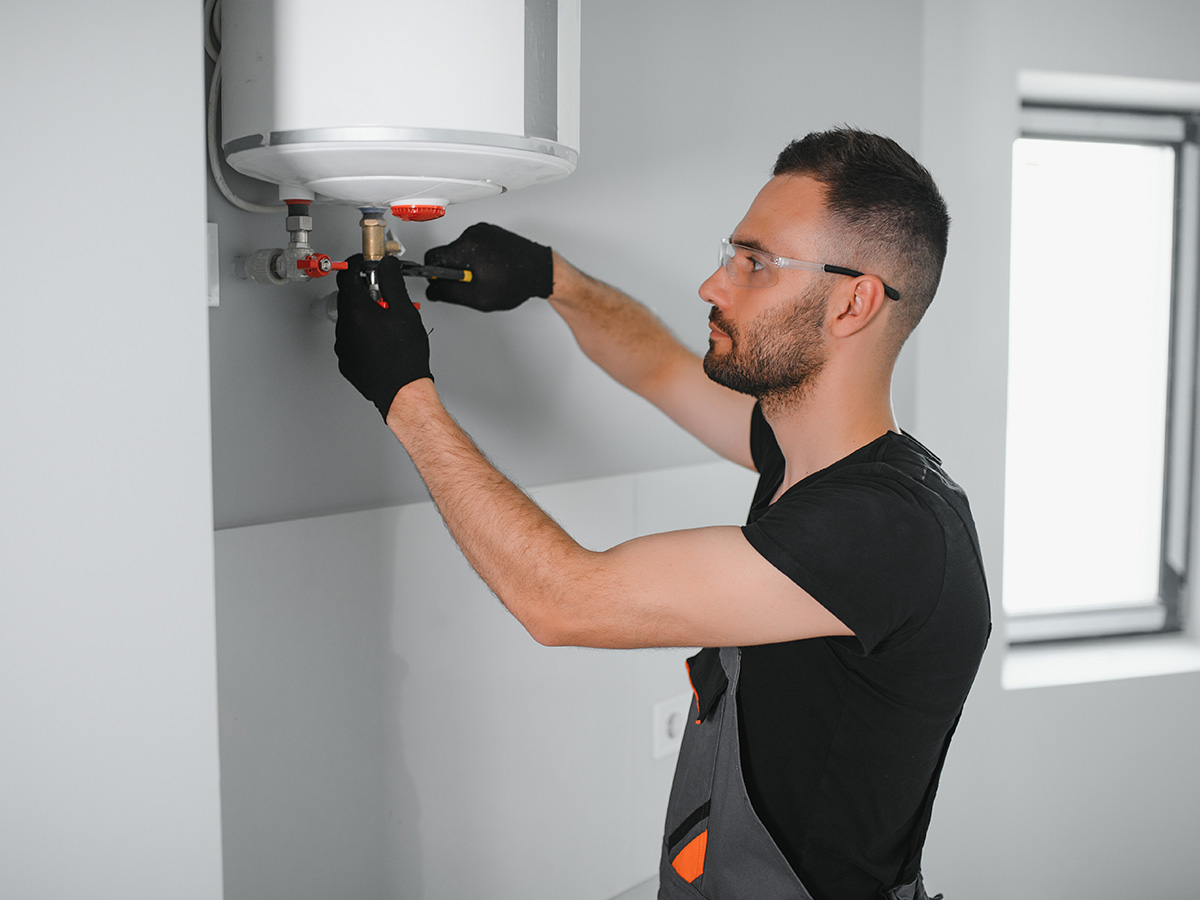
Your water heater takes the worst of it. In a traditional tank heater, scale settles to the bottom of the tank as sediment, where it forms an insulating layer between the burner and the water. The heater has to work harder and run longer to heat through that layer, which drives up your energy bill and wears the unit out early. It is also what causes that popping or rumbling sound an old water heater makes, sediment bubbling underneath. In a tankless unit, scale builds up inside the heat exchanger, the very part that heats your water on demand, and if it is not addressed it chokes performance and can shorten the life of an expensive machine dramatically.
The damage does not stop at the water heater. Scale narrows pipes over time, reducing flow and pressure. It clogs faucet aerators and showerheads. It shortens the life of dishwashers and washing machines, whose heating elements and valves scale up and fail. Across a whole house, hard water quietly ages your entire plumbing system and every appliance that touches water. A water heater that should give you ten or twelve years can fail well short of that when it is fed untreated hard water year after year.
The Extra Wrinkle With Well Water
If your home runs on a private well, and many out here do, hard water is often only part of the story.
Well water in Western Oklahoma frequently carries iron, which leaves rusty orange or brown stains on fixtures and laundry, and sometimes sulfur, which produces that unmistakable rotten-egg smell. It can also carry sediment and, in some cases, bacteria.
These are separate issues from hardness, and they call for different treatment, which is exactly why testing matters so much for well owners. A plain water softener will handle the hardness, but it will not fix an iron stain or a sulfur smell on its own. Knowing everything that is in your water is the only way to treat it correctly.
How to Test Your Water
You do not have to guess at any of this. There are a few ways to find out exactly what you are dealing with.
A simple at-home test kit gives you a rough hardness reading in minutes. If you are on city water, your utility publishes an annual water quality report that lists hardness and other measures. And a professional water test, which is what we recommend especially for well owners, tells you not just how hard the water is but whether iron, sulfur, sediment, or anything else is in the mix.
There is also the classic soap-shake test: put a little pure liquid soap and some water in a clear bottle, shake it, and if you get a thin layer of bubbles and cloudy water instead of a thick foamy lather, your water is hard.
Testing first means you treat the actual problem instead of buying more system than you need or less than you need.
How to Fix Hard Water for Good
Once you know what is in your water, there are a handful of proven ways to deal with it, and the right one depends on your water and your goals.
Water softeners. This is the standard, most complete fix for hard water. A traditional softener uses a process called ion exchange, swapping the calcium and magnesium that cause hardness for sodium as the water passes through a resin bed. Periodically the system flushes and recharges itself using salt from a brine tank, which is why softeners need salt topped up now and then. A properly sized softener protects your whole house, your plumbing, your water heater, and your appliances, and it fixes the spots, scale, scum, and lather problems at the same time. Sizing matters, and it is based on your water hardness and how much water your household uses, which is another reason to test first.
Salt-free water conditioners. These systems, often using a process called template-assisted crystallization, do not remove the minerals but change their form so they are far less able to stick and form scale. They use no salt and produce no wastewater, and they require less maintenance. They are a solid option for people who want scale protection without adding sodium or dealing with salt, though the water is not technically softened the way an ion-exchange system softens it. Which one is right depends on how hard your water is and what you are trying to accomplish.
Whole-house filtration. For well water especially, filtration handles the problems a softener does not. A sediment filter catches grit, a carbon filter improves taste and smell, and specialized iron and sulfur filters remove the minerals that cause staining and the rotten-egg odor. On a well, filtration is often paired with a softener for complete treatment.
Reverse osmosis for drinking water. If your main concern is the water you drink and cook with, a reverse osmosis system installed at the kitchen sink produces very clean, low-mineral water for drinking while the softener or conditioner handles the rest of the house. It is a point-of-use solution that complements a whole-house system rather than replacing it.
What to Do Until You Treat It
Even before you install a treatment system, you can slow the damage hard water does. Flushing a tank water heater once a year clears out the sediment that collects in the bottom, which protects the unit and keeps it running efficiently.
A tankless water heater should be descaled on a regular schedule to keep its heat exchanger clear. And when you are cleaning hard-water scale off fixtures, reach for gentle methods rather than harsh chemicals that can damage finishes. These steps do not solve the underlying problem, but they buy your plumbing time and money while you decide on a permanent fix.
If you are weighing a new water heater anyway, hard water is a strong argument for pairing it with a softener so you are not shortening the life of the unit you just bought. Our guide on tankless versus tank water heaters gets into how hard water factors into that decision.
Is Hard Water Safe to Drink?
Yes. This is worth saying plainly, because people worry about it: hard water is safe to drink.
The calcium and magnesium that make water hard are the same minerals your body needs, and some people even prefer the taste of mineral-rich water. Hard water is a nuisance and an expense because of what it does to your home, your skin, and your appliances, not because it is a health risk.
So the reason to treat it is comfort and cost, protecting your plumbing, extending the life of your appliances, and getting cleaner dishes, softer laundry, and better showers, not safety.
How CMD Plumbing Can Help
We deal with the effects of hard water across Western Oklahoma every single week, so we know the local water and what it does.
We can test your water to find out exactly what is in it, whether that is just hardness or hardness plus iron, sulfur, and sediment, and recommend a solution sized to your home rather than sell you more system than you need. We install and service water softeners and treatment systems, and we handle the water heater repair and installation that hard water so often makes necessary in the first place.
Treating your water is one of the few home upgrades that pays for itself in extended appliance life and lower energy bills.
Tired of fighting hard water? Call CMD Plumbing at (580) 330-0960.
Frequently Asked Questions
Why is the water so hard in Western Oklahoma?
Our region sits on mineral-rich limestone, dolomite, and gypsum formations, so water picks up calcium and magnesium as it moves through the ground. Both city and well water tend to run hard here, with well water often carrying iron and sulfur on top of the hardness.
Is hard water dangerous to drink?
No, hard water is safe to drink. The minerals that make it hard are ones your body needs. The problem with hard water is what it does to your skin, hair, laundry, plumbing, and appliances, not your health.
How do I know if I have hard water?
Common signs are spotty dishes, soap that will not lather, chalky scale on faucets and showerheads, soap scum, stiff laundry, dry skin, and water heaters or appliances failing early. An at-home test kit or a professional water test confirms how hard it is and what else is in it.
What is the best way to fix hard water?
A water softener is the standard, most complete fix, using ion exchange to remove the minerals that cause hardness. Salt-free conditioners are an alternative that reduces scale without removing minerals. On well water, filtration is often added to handle iron, sulfur, and sediment. Testing your water first tells you which combination you need.
What is the difference between a water softener and a salt-free conditioner?
A softener uses salt and ion exchange to actually remove calcium and magnesium, producing truly soft water. A salt-free conditioner changes the minerals so they are less likely to form scale, without removing them and without using salt. Softeners are more complete, while conditioners are lower maintenance and add no sodium.
Does hard water really ruin water heaters?
Yes. Scale builds up as sediment in a tank heater and inside a tankless unit’s heat exchanger, making the unit work harder, run less efficiently, and fail years early. Softening the water, and flushing or descaling the heater, protects it and extends its life.
I’m on a well. Do I need something different than city water?
Often, yes. Well water in this area frequently carries iron, sulfur, and sediment along with hardness, and a plain softener will not fix staining or a rotten-egg smell. A water test shows exactly what is in your well water so it can be treated with the right combination of softening and filtration.
Can you test my water and install a system?
Yes. We test your water to see what is in it and how hard it is, then recommend and install softening, filtration, or both, sized to your home and your household’s water use.
Call CMD Plumbing at (580) 330-0960 to deal with hard water for good.