You walked into the garage or the utility closet and found water pooling under the water heater. Maybe a small puddle, maybe it’s creeping toward the drywall. Either way, your stomach dropped. The good news: a leaking water heater is one of the more manageable plumbing problems if you move in the right order. The bad news: doing nothing, or doing the wrong thing first, can turn a contained leak into a flooded room.
Here’s exactly what to do, step by step, written for folks here in Western Oklahoma where hard water and older units make this a common call.
First, Is This an Emergency?
Not every leak is a five-alarm event, but some are. Treat it as an emergency and call a plumber right away if:
- Water’s coming from the tank itself, not just a fitting or valve. A leaking tank means the steel has corroded through, and that can’t be repaired, only replaced.
- It’s spreading fast or reaching outlets, the panel, or finished living space.
- You smell gas near a gas unit. Leave the house, call your gas utility, then call a plumber.
- The water’s hot enough to be a scald risk.
If it’s a slow drip from a top connection and the floor’s staying mostly dry, you’ve got a little more time. Still work through the steps below today, not next week.
Step 1: Cut the Power or Gas
Before you touch the water supply, shut off the energy source so the unit isn’t trying to heat a tank that’s emptying out.
Electric: go to the breaker panel and flip the breaker for the water heater. Don’t just turn down the thermostat, kill the actual breaker.
Gas: find the gas control dial on the front, usually near the bottom, and turn it to off. You don’t need to shut the gas off at the meter for a simple leak unless you smell gas.
Why first? A heater that keeps firing while it loses water can overheat the element or burner, and now you’ve got a second problem on top of the leak.
Step 2: Shut Off the Water to the Heater
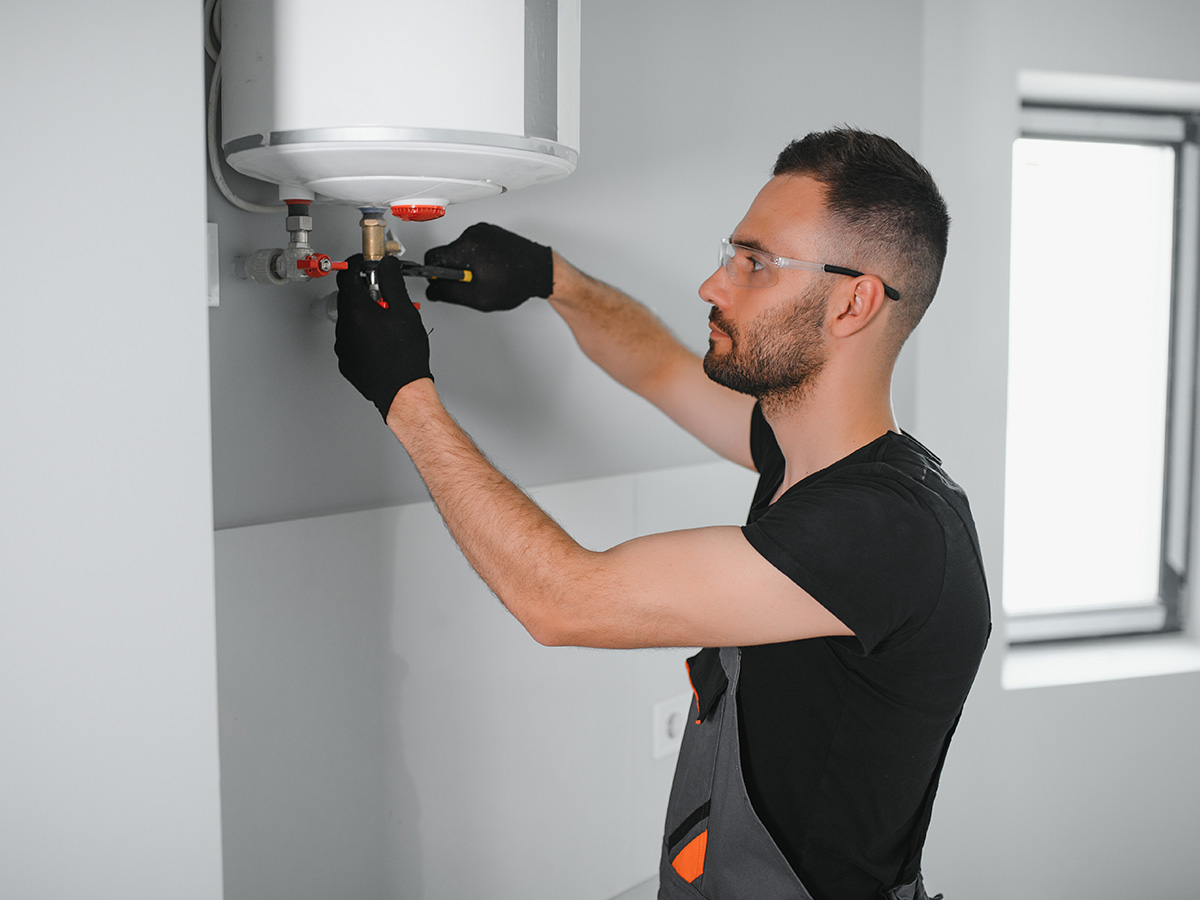
There’s a shutoff valve on the cold water line going into the top of the tank, usually a lever or a round handle.
- Lever: turn it so it sits across the pipe.
- Round handle: turn it clockwise until it stops.
If that valve’s stuck or you can’t find it, shut off the main water to the whole house instead. In most Western Oklahoma homes the main’s where the line enters the house, often near the heater, in a utility area, or in the garage. Either way, you’re stopping the tank from refilling as it leaks.
Step 3: Contain the Damage
Now slow the spread while you figure out the next move.
- Lay down towels and put buckets under the active drip.
- Move boxes, tools, and anything that can be ruined off the floor.
- Got a wet/dry vac? Start pulling up standing water.
- Take a few photos and a short video. If this turns into an insurance claim, that documentation helps.
Step 4: Figure Out Where It’s Leaking From
Where the water’s coming from tells you whether this is a repair or a replacement. Wipe everything dry, then watch for a minute or two.
From the top: often a loose or corroded connection on the cold or hot line, or a failing fitting. Frequently repairable.
From the T&P valve (the pipe running down the side): the valve might be doing its job and releasing pressure, or it might be faulty. Either way it needs a plumber’s eyes, because high pressure in a tank is a safety issue.
From the bottom of the tank: usually the worst case. Sediment buildup, common with our hard water, corrodes the bottom from the inside. Once the tank itself leaks, the unit’s done.
When to DIY and When to Call
Some things on a water heater are fair game for a handy homeowner. Snugging up a clearly loose fitting, or draining the tank to relieve pressure, can be within reach if you’re comfortable and you’ve shut off the power and water first.
Call a licensed plumber when:
- The tank itself is leaking and needs replacing.
- The T&P valve is discharging and you don’t know why.
- It’s a gas unit and anything gas-related is involved.
- You’re just not sure what you’re looking at. With a water heater, a wrong guess gets expensive or dangerous.
Water, electricity or gas, and pressure all in one appliance is a combination where a confident guess can do real harm. No shame in handing it off.
How CMD Plumbing Helps
We deal with leaking and failing water heaters across Western Oklahoma every week. We’re based at 3800 W Commerce Rd in Clinton, and because we answer the phone and keep a schedule, we can usually get out, tell you whether it’s a repair or a replacement, and walk you through your options before any work starts. We service gas and electric, tank and tankless.
If you’re near home base, see our water heater repair in Clinton page. Out toward Elk City, we’ve got water heater repair in Elk City too.
Water heater leaking and spreading right now? Call us 24/7 at (580) 330-0960.
Heading Off the Next One
Most tank water heaters last 8 to 12 years, and hard water cuts that short. A couple of easy habits help:
- Flush the tank once a year to clear out sediment, the main reason bottoms fail early around here.
- Glance at the base every few months so you catch a slow leak before it’s a flood.
- If your unit’s past 10 years and starting to leak, plan for a replacement instead of chasing repairs.
Frequently Asked Questions
Why is my water heater leaking from the bottom?
Usually sediment has corroded the inside of the tank, common with hard water. Once the tank itself leaks, it can’t be repaired and needs replacing.
Is a leaking water heater an emergency?
It can be. If water’s coming from the tank, spreading fast, reaching electrical, or you smell gas, treat it as one and call right away. A slow drip from a top fitting gives you a little more time, but still handle it the same day.
Can I keep using it if it’s only leaking a little?
No. Even a small leak gets worse, and a leak from the tank means failure is coming. Running it can also damage the element or burner and keep adding water damage.
Should I turn the water heater off myself?
Yes, if you can do it safely. Shut off the power or gas first, then close the cold water valve on top. If you can’t reach those safely, shut off the main and call a plumber.
How long do water heaters last in Western Oklahoma?
Usually 8 to 12 years, and our hard water tends to push that toward the short end. Annual flushing helps.
Do you replace water heaters the same day?
Often, depending on the unit and our schedule. Call and tell us what you’ve got and we’ll let you know what’s realistic.
Need help now? CMD Plumbing answers 24/7. Call (580) 330-0960.